01
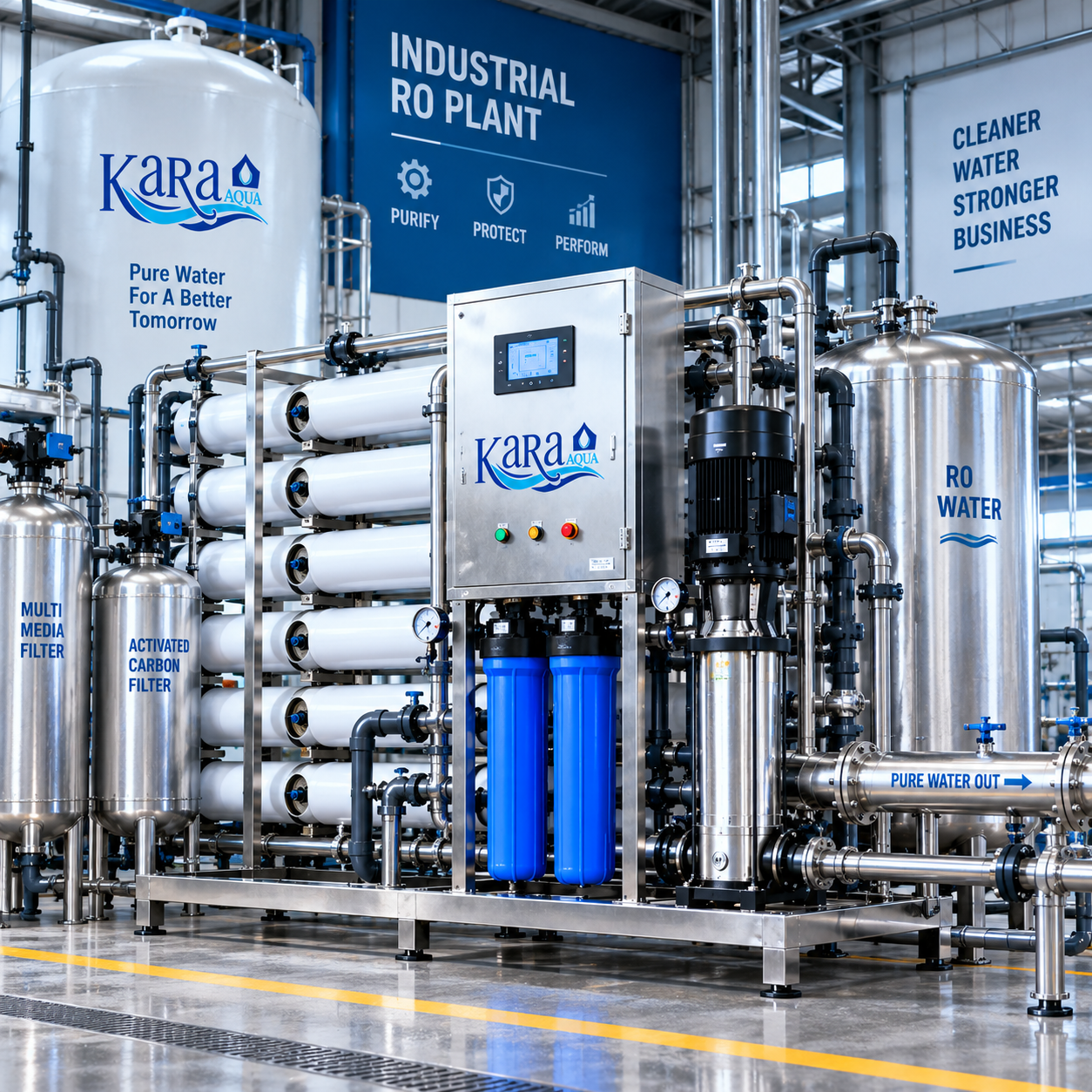
500 LPH — ₹59,999
Standard starting reference for a 500 LPH industrial RO plant.
Ten years into servicing RO plants across NCR, Ghaziabad still surprises me with how much its water quality varies from one industrial belt to another — Sahibabad is nothing like Loni, and Loni is nothing like the Meerut Road industrial zone. If you're shopping for an industrial RO plant in Ghaziabad, that variation alone should change how you approach this purchase.
This isn't a sales page dressed up as a guide. It's a breakdown of what I actually check, what typically goes wrong, and what a fair price looks like — built from real Kara Aqua installations across Ghaziabad's factories and commercial units.
Ghaziabad sits in a stretch where groundwater quality has been declining for years due to industrial density and falling water tables. In practical terms, here's what we consistently find on-site:
Sahibabad Industrial Area: 1200–2000 ppm TDS — high hardness and scaling.
Loni Industrial Belt: 1500–2500 ppm TDS — iron content and borewell dependency.
Meerut Road Zone: 1000–1800 ppm TDS — mixed municipal and borewell supply.
I'm sharing ranges, not exact numbers, because water quality shifts seasonally — but the pattern holds: this is consistently harder, higher-TDS water than what standard commercial RO membranes are built to handle without extra pre-treatment.
A Ghaziabad Installation That Taught Me a Lesson: A chemical processing unit in the Loni belt had already burned through two RO systems from different vendors in under 18 months combined. Both suppliers had installed standard commercial-grade plants without properly testing the iron content in their borewell water.
When we tested it ourselves, iron levels were high enough to be visibly staining their storage tanks within weeks. We built in a dedicated iron removal and multi-media filtration stage ahead of the RO unit. That single change extended their membrane life dramatically, and they've stuck with the same membranes for over two years now without early failure — with regular AMC support keeping performance consistent.
The lesson I took from this: in Ghaziabad specifically, skipping iron testing is one of the most expensive mistakes a factory can make.
Nobody should quote you a single fixed number without seeing your water report first. These are standard starting prices for working reference.
Standard starting reference for a 500 LPH industrial RO plant.
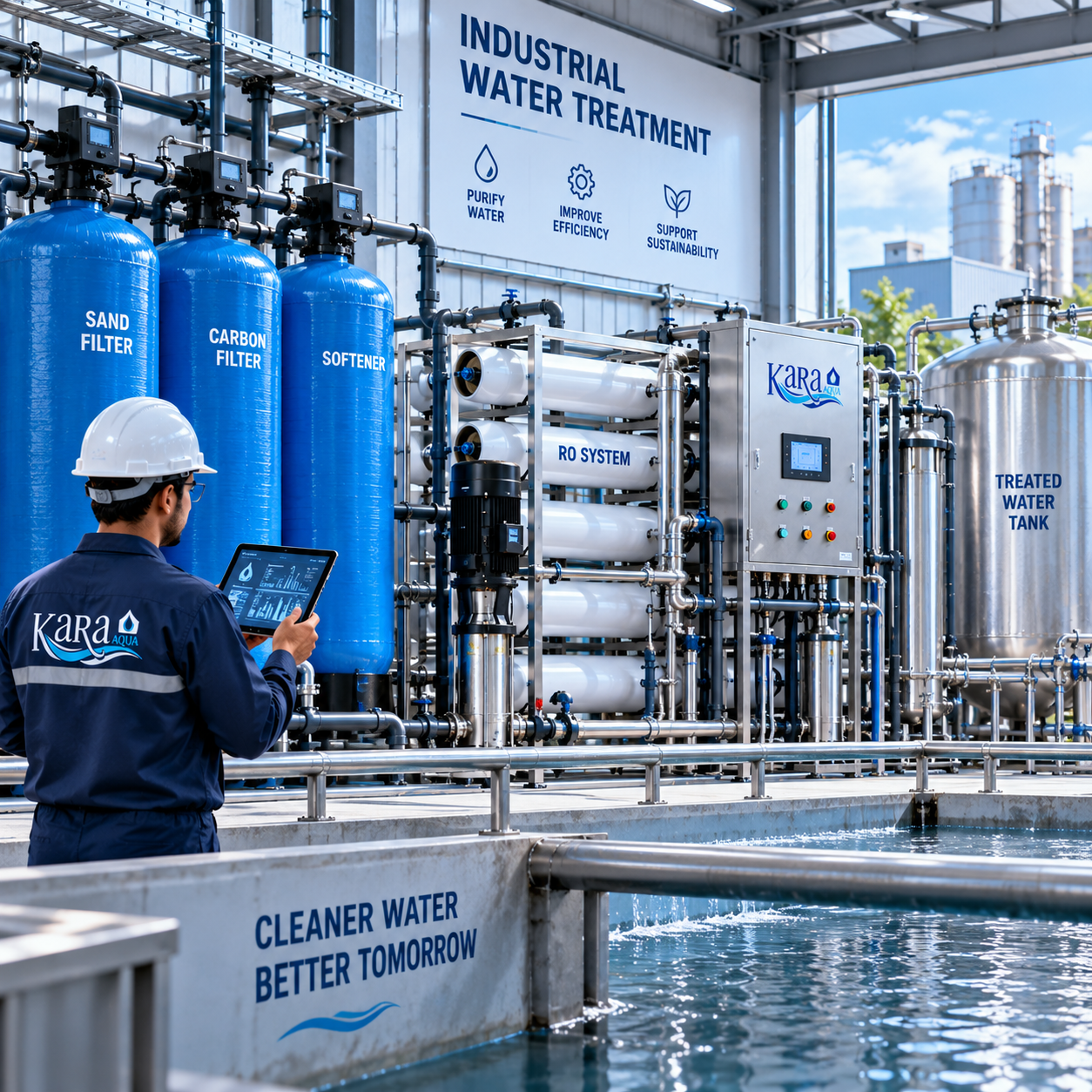
Standard starting reference for a 1000 LPH industrial RO plant.
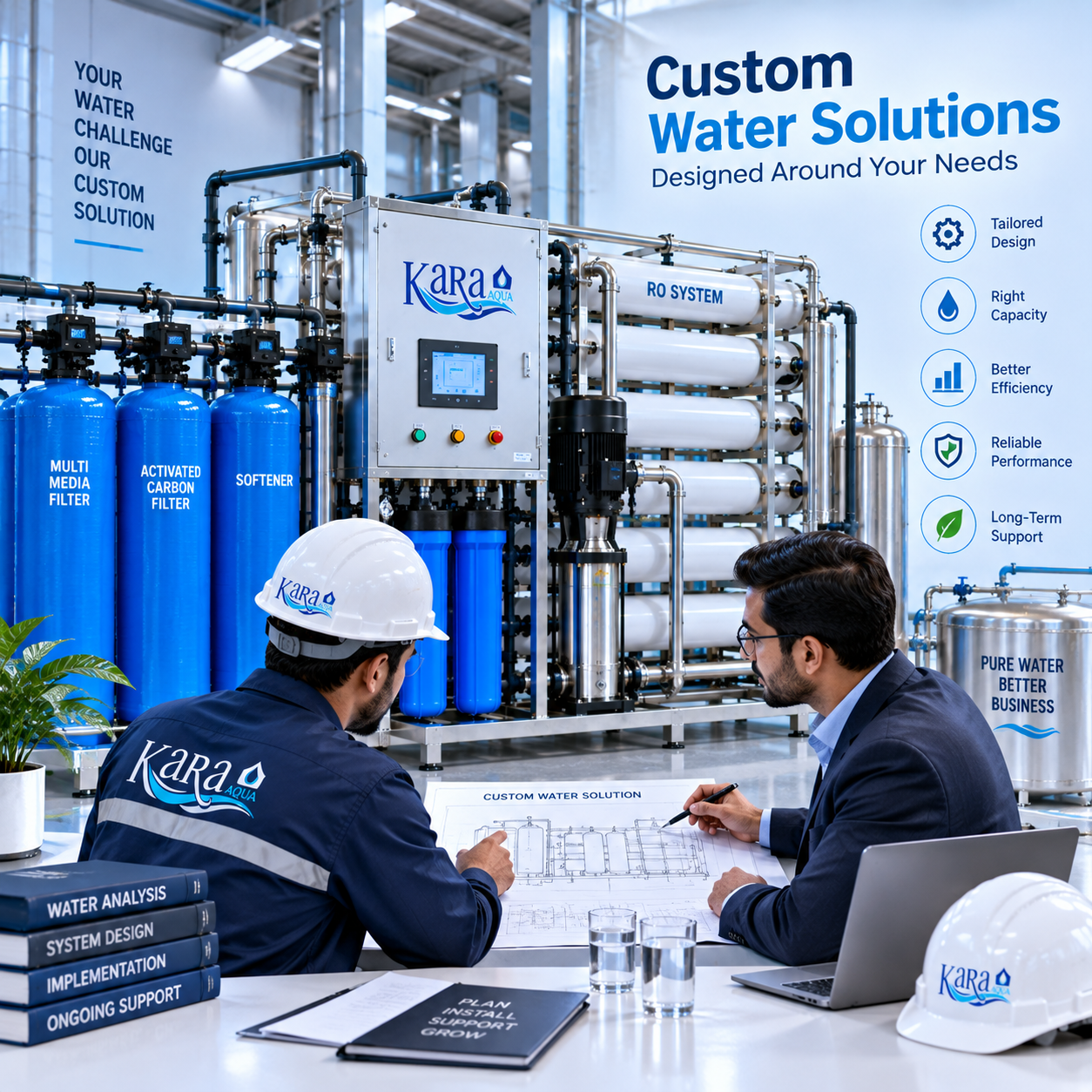
Standard starting reference for a 2000 LPH industrial RO plant.
3000 LPH: ₹2,99,999
5000 LPH: ₹3,99,999
What pushes the price above these base figures: iron removal or softening stages common in Loni and Sahibabad units; fully automatic PLC-based controls versus manual operation; larger storage tanks for units running multiple shifts; and longer plumbing runs if the plant location is far from the water source. If your requirement is closer to office, hospital, or institutional use rather than heavy industrial load, our commercial RO plant options may be a better fit.
Anyone quoting you a final number over WhatsApp without a site visit is guessing — and you'll likely pay for that guess later in maintenance costs.
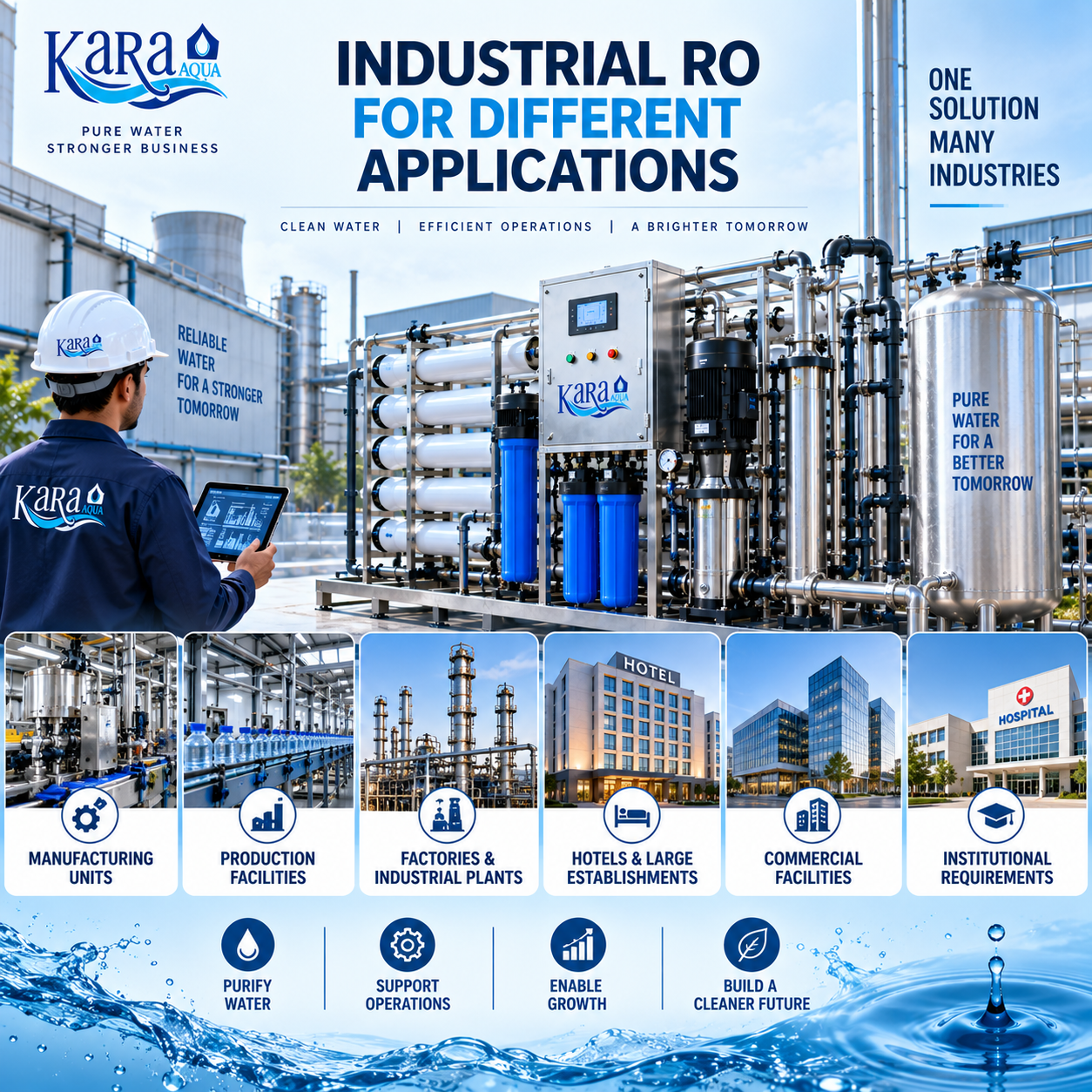
Different industries in Ghaziabad have different water demands, and a one-size-fits-all recommendation rarely works well.
We're based in Delhi NCR and actively service Ghaziabad alongside our core zones in East Delhi and Noida. Our technicians understand area-specific water issues such as hardness in Sahibabad and iron in Loni before they arrive on-site.
Water testing is done on-site, not assumed from area data.
Transparent, written AMC terms with no vague promises.
Installation, repair, maintenance and RO on rent for businesses wanting to trial before committing.
Quick turnaround on breakdown calls because we're operating within NCR.
Site visit and water testing for TDS, iron, hardness and pH.
Capacity finalization and pre-treatment design based on test results.
Plant installation and plumbing work. Larger 3000 LPH+ plants may take slightly longer depending on site complexity and civil work.
Commissioning, flow testing and staff handover.
I've compiled this list after watching too many businesses get stuck with underperforming systems.
Ask whether your specific water source has been tested rather than relying on area averages. Ask for the expected recovery rate with numbers. Get the membrane and pump brands in writing. For Ghaziabad units, same-day or next-day response should be standard, not an exception. Finally, ask for AMC visit frequency and scope in the contract rather than accepting only a verbal assurance — this is exactly what a proper RO AMC service should include from the start, not something you negotiate after installation.
Several Ghaziabad industrial belts, especially Loni, rely on borewell water with notably high iron content. Without a dedicated iron removal stage before the RO membrane, iron deposits cause rapid fouling, staining, and significantly shortened membrane life within just a few months.
It depends on your peak hourly water consumption rather than factory size alone. Most mid-sized units running single-shift operations typically need 1000–2000 LPH, but a proper load calculation based on your actual process requirements is essential before deciding.
Not without adjusting the pre-treatment stage. Sahibabad often needs stronger softening for hardness, while Loni typically requires iron removal. The core RO unit can be similar, but pre-treatment must be customized to each area's specific water profile.
Pre-treatment stages like softeners or iron removal units typically add a moderate percentage to your base plant cost, depending on capacity and water severity. Skipping this to save money upfront usually costs more later through frequent membrane replacements and downtime.
Yes, we provide structured AMC plans covering scheduled membrane cleaning, pump checks, and filter replacement for Ghaziabad clients. Contract terms, visit frequency, and coverage scope are documented in writing so there's no ambiguity about what's included.
Factories typically need higher continuous output and more robust pre-treatment due to industrial-grade water usage and shift-based operations, while commercial buildings often require lower daily volumes with simpler configurations. Capacity and automation needs are assessed separately for each.
A typical setup includes pre-filters, a softener or iron removal unit, high-pressure pumps, RO membranes housed in pressure vessels, a control panel, and storage tanks — each stage selected based on your specific source water quality.
With proper maintenance, the overall system can run efficiently for 10–15 years, though individual components like membranes typically need replacement every 2–3 years and pumps may need servicing or replacement every 5–7 years depending on usage intensity.
Yes, industrial RO plants are commonly customized for textiles, pharmaceuticals, food processing, chemicals, and general manufacturing, with variations in pre-treatment, output TDS targets, and automation level based on each industry's specific process water requirements.
A single-stage RO plant passes water through one membrane pass, suitable for moderate TDS sources. A double-stage system runs a second pass for further purification, typically used when very low output TDS is required, such as in pharma or lab-grade applications.
The single biggest factor in whether your industrial RO plant lasts 5+ years or fails within months isn't the brand name on the machine — it's whether the pre-treatment stage was designed around your actual water source. In Ghaziabad, that almost always means budgeting for iron removal or softening upfront, not as an afterthought. Get a free water test before you get a quote. That one step will tell you more about your real cost and capacity needs than any brochure or price list ever will. Contact Kara Aqua for a free site visit and honest industrial RO plant recommendation for your Ghaziabad facility.
Contact Kara Aqua →


